


.png)
When a company starts a new project, the focus is usually on what it needs today. A new website. A CRM. An intranet. Automation. An e-commerce platform.
And while it makes sense to solve problems step by step, there is one crucial question we should be asking from the very beginning:
What happens when we start to succeed?
It may sound paradoxical, but success often brings complications. In many cases, it can mean completely rebuilding digital tools or platforms simply because future growth was not considered at the outset.
What does scalability mean in practice?
We call this scalability. And although the term has become somewhat diluted through overuse and misuse, the principle itself is simple.
The solution you choose should work not only today, but also in one year or five years, when you have more customers, employees, products, or locations.
In other words, scalability means being able to expand, add to, adapt, and modify a solution with relative ease.
That does not mean a small company building its first intranet needs to buy features for international expansion or cloud storage capable of supporting several interconnected businesses. Nor does a first website need to connect to a warehouse system that does not yet exist simply because one may be introduced in the future.
Thinking ahead means making sure those things can be added when the time comes.
The business world is a jungle: you never quite know where the vines will lead or where a tiger may be waiting. The solution you choose needs to be affordable within your current budget and simple enough to manage with the team you have today. Additional features can then be introduced gradually, once it becomes clearer which direction your business is heading.
The most common mistake: It works for today, we will deal with tomorrow later
We are often asked to create something simple.
A company needs a new website quickly, a basic CRM system, or its first automation. It chooses the cheapest option and launches the project.
At that moment, the decision usually makes sense. Then the thing everyone was hoping for happens: the company succeeds. Revenue grows, the business expands, sales increase, more clients come on board—in short, the company grows.
New employees join. New services are introduced. The company enters new markets. Marketing starts bringing in more customers. The sales team needs different data.
And suddenly, the system that worked perfectly two years ago is holding the business back.
If you planned for this from the start, you can sit down with your digital partner and decide which features to add, which new automation to introduce, how to expand the website, or where to deploy a more advanced AI solution.
But if growth was never considered, you may discover that the AI solution does not fit your existing system, new features cannot be added, the website needs to be rebuilt from scratch, and the CRM can no longer be modernized.
In situations like these, companies often postpone taking action for as long as possible, missing opportunities in the process. And by the time they finally address the problem, the investment is higher than it needed to be.
How to think about planning
You do not need to know exactly where your company will be in five years. In business, that is rarely possible.
But when planning digital solutions, there are a few simple questions you can—and should—ask.
- Do we want to offer more products or services in the future?
- Would operating internationally be both possible and desirable for us?
- Is it likely that we will hire more employees?
- Are there areas where automation could save us time, even if it is not essential or affordable today?
- Will we eventually need to add new features or perhaps integrate with other companies?
- Which processes do we currently handle manually and are likely to want to automate over time?
The answers to questions like these often determine whether a digital solution will be able to grow alongside the company.
If you choose the right partner for process digitalization, they will probably ask you these questions themselves. Because a good partner does not simply want to collect payment for a solution that works today.
We, for example, prefer long-term projects. They are often ideal for our clients as well, because the solution grows with the business. There is no need to bring in a new supplier when the existing one already understands how the company works.
Almost anything can be scaled
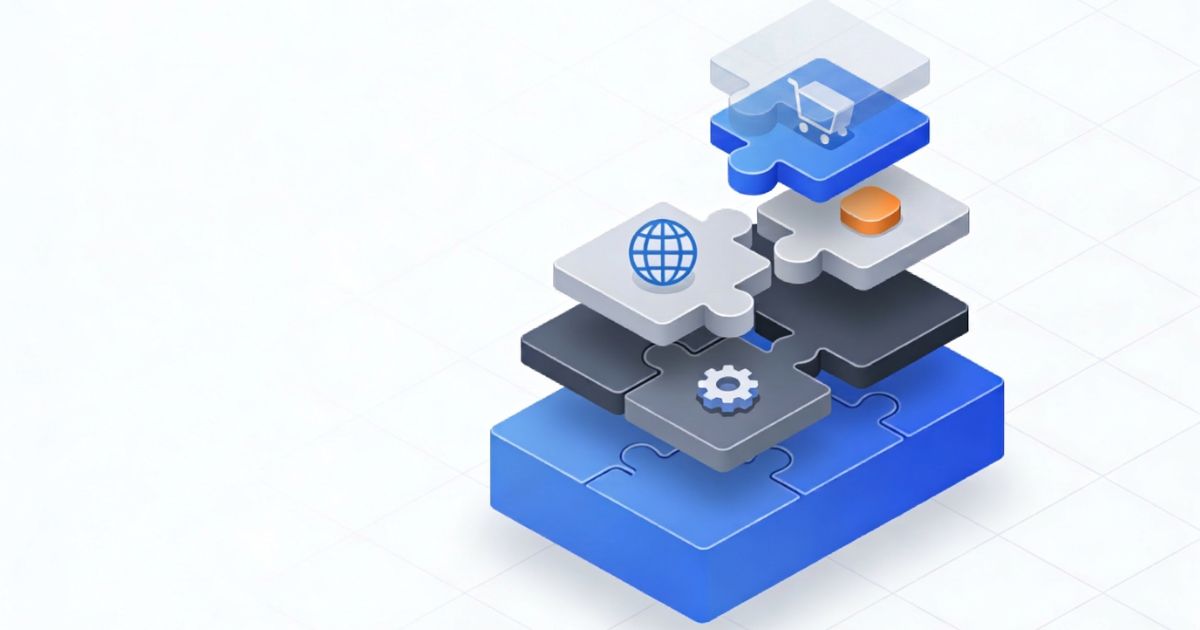
Practically any digital tool can be designed to scale.
A website can be prepared for new sections, languages, or services.
A CRM can begin as a simple contact database and gradually evolve into the commercial hub of the entire company.
Automation can initially handle a single routine task and later connect entire business processes.
The same applies to internal communication, reporting, data management, and the use of artificial intelligence.
What matters is that each new stage builds on the one before it, so there is no need to start again from scratch.
What if you did not think about scalability?
Most companies only start thinking seriously about scalability once they encounter their first limitations.
As long as the company is growing slowly, the original solution usually works without any major problems. It is only when the number of customers, employees, or processes increases that it becomes clear that some systems are no longer sufficient.
The key is to recognize the problem early and start addressing it before it begins to hold back further growth.
At MFGroup, we encounter situations like these quite often. In the following examples, we will show you how we have helped solve them.
Example #01: When YouTube outgrows its own system
The LEGO Group came to us with a similar challenge.
The brand already had a YouTube channel, but it was not being managed strategically. It functioned more as a repository for videos.
As the amount of content grew, so did the project. With more videos, more language versions, and more markets involved, the original way of managing the channel was no longer enough.
It was therefore not sufficient simply to define a strategy and optimize the channel. We needed to look at the entire system used to manage the content. Together with The LEGO Group team, we focused on setting up the processes behind it.
Records were fragmented, a large part of the work was being handled in spreadsheets, and navigating tens of thousands of videos was becoming increasingly difficult.
We therefore designed our own IX platform for centralized video management and created analytical dashboards that provide the client with the data needed for strategic decision-making.
This made it possible to efficiently manage more than 41,000 videos in 43 language versions across more than 200 countries.
Together, we developed the strategy and established processes across regions. More efficient management made it possible for the channel to keep growing.
It also ensured that larger volumes of content, more followers, and more regions would not become obstacles to further development, allowing the brand to take advantage of the opportunities that came its way.
It is a good example of why scalability does not necessarily mean starting over. Often, it is enough to rethink processes, remove bottlenecks, and create a system that can keep pace with continued growth.
Example #02: When a company outgrows its intranet
As a company grows, it is not only its business results that change.
The number of employees, companies, documents, and communication channels increases as well. And that is often when the original intranet stops fulfilling its role.
ResInvest Group faced a similar situation.
The holding company, which brings together more than eight companies, was using an intranet that no longer reflected the way the group actually operated.
It contained numerous features that nobody used, while employees were missing tools they needed every day. It was also expensive to operate, meaning the company was paying for functionality it did not use.
Rather than continuing to expand a system that no longer worked well, we designed a new intranet built specifically around the structure of the entire group.
The result was a central space for internal communication, documents, contacts, and company news, while individual companies were given their own sections for content relevant only to them.
The result was not a more complicated system. It was a simpler, clearer solution that reflects the company’s current needs, reduces costs, and is ready for future growth.
That, in our view, is what well-designed scalability looks like: the system adapts to the company, rather than forcing the company to adapt to the system.
Example #03: When a company outgrows its website
Changing systems or processes is not always necessary. Sometimes, a company simply outgrows its website.
That was the case with Chargee.
Over time, the company expanded its range of services and began targeting several very different audiences—from households and fleet managers to developers and local authorities.
The original website, however, sent every visitor down the same path. As a result, many visitors did not understand what Chargee could offer specifically to them.
The answer was not to add more subpages. The entire website needed to be restructured.
We designed a new information architecture that guides each target audience towards the information most relevant to them.
As a result, the website became not only easier to navigate, but also a significantly stronger sales tool and a foundation for performance campaigns.
We dealt with a similar situation at Contin.
Over several years, the company had evolved significantly, investing in technology and professional expertise. Its website, however, still made it look like a small business.
It no longer reflected the impression clients and partners had of the company when meeting its team in person.
That is why we did not begin the new website with visual design. We began by developing a thorough understanding of the company and how it works.
The new structure and content were built around the real needs of Contin’s clients. The result is a representative website that now reflects the level of expertise across the company while also being ready for further development, such as additional language versions or new content.
Both projects demonstrate the same principle.
When a company grows, simply adding more layers to the original solution is not always enough. Sometimes you need to stop, look at the bigger picture, and redesign the structure so that it supports further growth instead of holding it back.
Example #04: When it is not possible to change everything at once
Not every company can afford to switch off its existing systems and replace them all within a few months.
Many businesses rely on solutions that have developed over years and become so interconnected that any major intervention could put the entire operation at risk.
And yet, those same legacy solutions may eventually begin to hold back further development.
Even in situations like these, there is a way forward.
An integration layer can allow new and existing systems to operate side by side temporarily and communicate with one another.
This removes the need for a one-off, high-risk replacement of everything at once. Individual components can instead be modernized gradually, based on the company’s current needs, without disrupting day-to-day operations.
Digitalization does not have to be one enormous project.
It can be a series of carefully planned steps that build on one another and ultimately lead towards the same goal: a modern solution that is ready for further growth.
Think about growth from the very first step
Every company has to start somewhere. And no company needs the largest or most complex solution on the market from day one.
What matters is making sure that what you build today does not become an obstacle tomorrow.
Whether it is a website, intranet, YouTube channel, CRM, or an entire corporate ecosystem, it pays to think about how the solution will work in one year, three years, or when your company doubles in size.
And if you have already reached the point where your existing systems are beginning to hold you back, it is not too late.
In most cases, there is a way to modernize them gradually without throwing everything away and starting from scratch.
Whatever part of the process you are looking for a partner for, get in touch with us.
Together, we can plan a solution that is ready for growth—or help you resolve a situation where an outdated solution is already holding you back. We have experience with both.


.png)
.png)
.png)
.png)
.png)
.png)


