


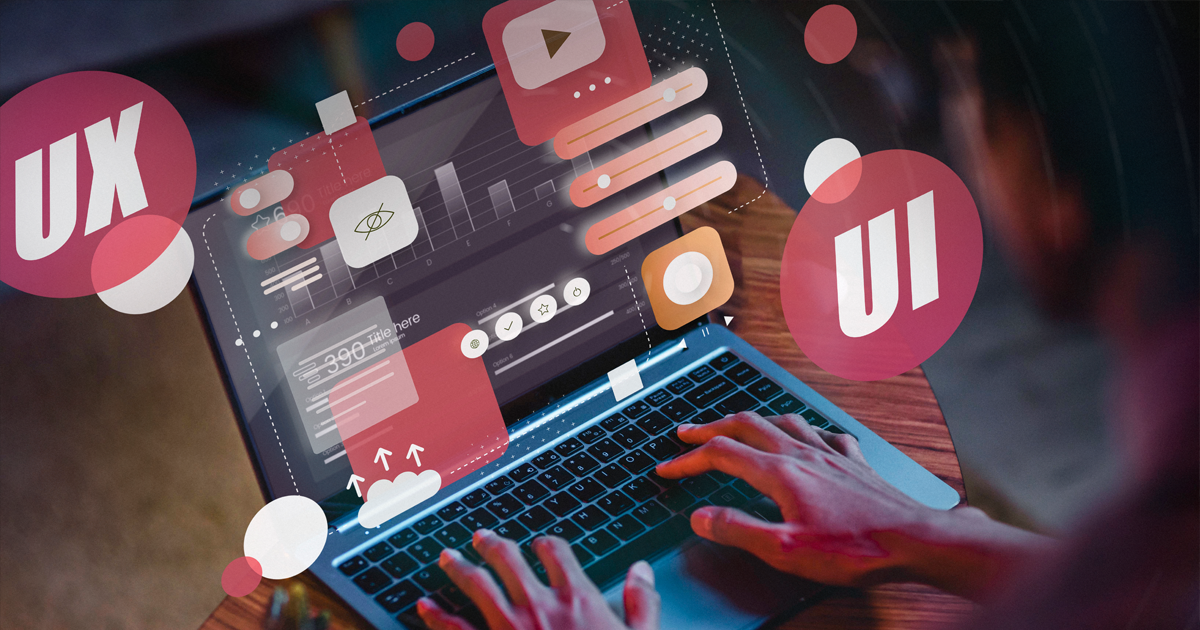
At first glance, design might seem like just the packaging. A way to make a good impression, but not something that affects the essentials – functionality, content, or business goals. But the reality is just the opposite.
Visual quality directly influences how people perceive your brand, whether they trust it, how they behave on your site, and whether they’ll take the next step you’re hoping for.
Design isn’t the cherry on top. It’s the very first thing that determines whether people will take an interest in your service – or write it off within seconds. In the digital world, where decisions occur in a split second, design becomes a crucial factor in success.
Trust is formed within seconds
Research – and our own experience – says the same thing: people form a first impression within 0.05 to 0.2 seconds. Visual design plays a dominant role in that ultra-short moment. Is the page clean, professional, and well-balanced? Or is it cluttered, chaotic, and outdated?
A modern visual style conveys a subconscious message that the brand is up-to-date, values quality, and prioritizes user experience. In contrast, an inconsistent or dated design can damage trust – even if the actual product or service is excellent.
A simple example? A high-end e-commerce site that looks like it hasn’t changed since 2010 will raise doubts about whether it’s even safe to shop there. People hesitate to enter payment info. And often, they don’t even make it to the shopping cart.
Emotion comes before logic
When it comes to decision-making, emotions often play a stronger role than rational thought. The overall visual impression of a website – its colors, imagery, spacing, layout, and motion – instantly evokes a mood. A sense of calm, professionalism, and trust. Or tension, confusion, and discomfort.
This isn’t just intuition – it’s a well-documented psychological effect. People instinctively trust visually appealing products because they assume they’ll be easier to use. This is known as the “aesthetic–usability effect.” A clean, aesthetically designed layout boosts trust and reduces resistance.
When a user feels good on your site, they’re far more likely to stay, read, explore, and engage. But if something feels “off” visually, they’ll bounce before they even read the first sentence.
Visual hierarchy guides and clarifies
Design isn’t just about looks – it’s also a navigation system. A clear visual hierarchy, utilizing size, contrast, spacing, and typography, helps users understand what’s important and where to focus.
That means users don’t get lost. They know where they are, what’s next, and what action to take. The site “makes sense.” They don’t need a manual or a second thought. This shortens decision time and increases the chance of conversion.
Yet many companies overlook this. They overload their homepage with three equally prominent CTAs, resulting in a confusing structure or cluttered layout. The result? The user gets overwhelmed, loses interest, and leaves.
Distinctiveness is a competitive advantage
You can have the same features and content as your competitors. But your visual identity is what sets you apart. Brands that invest in a consistent visual style – logo, colors, icons, illustration styles, typography – create a lasting impression.
A strong visual identity builds long-term recognition. It helps customers immediately know they’re in the right place. It creates familiarity and loyalty. And when people are choosing among dozens of similar options, being the one they remember can make all the difference.
Timeless design saves time and money
When done right, design doesn’t need a complete overhaul every year. A timeless visual solution, built on clarity, simplicity, and strategy, can remain relevant for years. It adapts well to new trends, devices, and formats – and grows with your business.
In contrast, trend-based design with no strategic foundation tends to age quickly. That leads to redesigns. And more redesigns. Not only does that cost money, but it also creates friction – especially if your design isn’t aligned with your site’s structure and technology from the start.
Visual quality isn’t an expense – it’s an investment. Done thoughtfully, it pays off long term. And it makes the future development of your brand and products much smoother.
Design as a strategic tool
Design isn’t decoration. It’s the language your brand speaks. And just like any communication, it matters whether you communicate clearly, confidently, and with intent.
Visual quality is the first thing your customers perceive – and often the last thing they remember. If you want your website or app to truly perform, technical precision isn’t enough. It also needs to appear trustworthy to your users.
Curious whether your design leaves the right impression?
Get in touch. At Digital Vision, our creative division, we blend aesthetics with user behavior, data with strategy, and functionality with trust. We’ll show you how your visual design impacts performance – and what to do to make it work for your business.
.png)
.png)
.png)
.png)
.png)
.png)
.png)
.png)


